You Won’t Believe What I Found in Chefchaouen’s Hidden Markets
Nestled in the Rif Mountains, Chefchaouen isn’t just a blue dream—it’s a living marketplace where culture pulses through every alley. I wandered for days, not just snapping photos, but diving into the real heartbeat of the city: its commercial soul. From handwoven wool to spice stalls bursting with color, the markets here aren’t tourist traps—they’re where locals trade, laugh, and keep traditions alive. This is more than shopping. It’s a story of craft, community, and color you have to feel to believe.
The Blue Streets and Beyond: Uncovering Chefchaouen’s Commercial Heart
Chefchaouen is often celebrated for its dreamlike blue-washed walls, cascading down hillsides like a painted mirage. Travel blogs, Instagram feeds, and photography collections frequently frame the city as a visual spectacle—a destination defined by its aesthetics. While the blue hues are undeniably captivating, they represent only a surface layer of a much deeper cultural and economic reality. Beyond the photogenic alleys lies a thriving commercial ecosystem that sustains the city’s identity and livelihood. The true essence of Chefchaouen is not in its paint, but in its people—specifically, the merchants, artisans, and farmers who keep its markets alive.
The medina, or old city, functions not as a curated open-air museum, but as a dynamic hub of daily commerce. Unlike some historic districts that have been sanitized for tourism, Chefchaouen’s market streets remain organically integrated into the rhythm of local life. Residents navigate the same narrow lanes as visitors, balancing baskets of herbs, leading goats on ropes, or pausing to chat with shopkeepers. The scent of cumin and fresh bread mingles with the faint mineral tang of wet plaster, a reminder that this is a place lived in, not merely observed. The commercial zones here are not separate from the city—they are its central nervous system.
Historically, Chefchaouen’s economy has been shaped by its mountainous location and relative isolation. Founded in the 15th century as a defensive stronghold, the city evolved into a sanctuary for Andalusian Muslims and Jews fleeing Spain, bringing with them rich traditions of textile production, agriculture, and craftsmanship. Over centuries, these practices became embedded in the local economy. Today, the market is where that heritage is preserved—not in glass cases, but in active exchange. Every sale of a hand-dyed scarf or a clay teapot is a continuation of a lineage that stretches back generations.
What sets Chefchaouen apart from other tourist-friendly Moroccan cities like Marrakech or Fes is the balance it maintains between accessibility and authenticity. While tourism has grown significantly over the past two decades, the city has resisted full commercialization. Many shops still cater primarily to locals, and the market’s structure reflects this duality. The central squares may draw cameras, but the side alleys reveal the real economy at work—where transactions are not performances, but necessities. Understanding this distinction allows visitors to move beyond the postcard and engage with a living culture.
The Medina’s Marketplace: Where Tradition Meets Trade
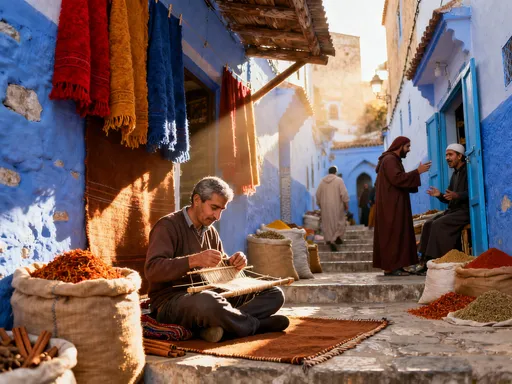
Walking through Chefchaouen’s medina is like stepping into a three-dimensional tapestry of commerce. The market unfolds organically, without rigid zoning or modern retail logic. Stalls cluster by material and function, yet the layout feels intuitive rather than planned. Wool weavers sit near dyers, potters near spice vendors, and food sellers near communal seating areas where families gather for mint tea. This natural clustering fosters collaboration and convenience, allowing customers to move seamlessly from one need to the next.
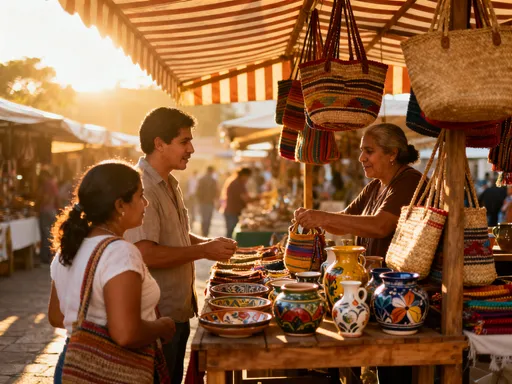
The heart of the medina’s trade lies in its artisanal goods. Wool blankets, known locally as haiks, are among the most sought-after items. Thick, warm, and often patterned with geometric motifs in earthy reds and indigo, these textiles are woven using techniques passed down through families. Vendors display them in vibrant stacks, their textures inviting touch. Alongside them, woven leather bags—practical for daily use and travel—are crafted with precision, their straps dyed in deep saffron or forest green. Pottery, too, holds a central place in the market. Hand-thrown tagines, cups, and decorative plates feature intricate hand-painted designs, often inspired by Berber symbolism.
One of the most distinctive aspects of shopping in Chefchaouen is the social dimension of trade. Transactions are rarely quick exchanges. Instead, they unfold as conversations—sometimes in broken French or Spanish, often with gestures and smiles bridging language gaps. Haggling is expected, but not aggressive. It functions as a ritual of mutual respect, where both buyer and seller negotiate not just price, but relationship. A vendor might offer tea before discussing cost, turning a simple purchase into a shared moment. This approach reflects a broader cultural value: commerce as connection, not just consumption.
Pricing in the medina varies, but fairness is generally maintained. Locals know the baseline value of goods, and overcharging tourists—while not unheard of—is less common than in more heavily touristed cities. Many artisans are proud of their work and prefer to sell at reasonable rates that reflect their labor. Visitors who take the time to understand the process behind a product—how long it takes to weave a blanket, how many plants are needed to dye a scarf—often find that prices feel justified. The market, in this way, becomes an educational space as much as a commercial one.
Artisans at Work: The Craft Behind the Color
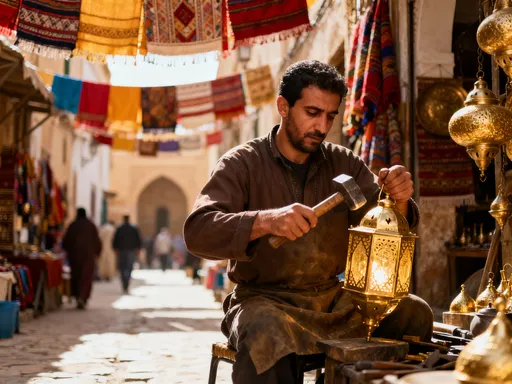
Behind many market stalls in Chefchaouen lie small workshops where the magic of creation unfolds. These hidden spaces—often just a room or courtyard behind a storefront—house the tools and traditions that give the city’s crafts their soul. Here, artisans work with natural materials, using methods unchanged for generations. The most striking of these is the textile-dyeing process, which relies on plant-based pigments to produce the deep, lasting colors the region is known for.
Indigo is the most iconic dye, responsible for the famous blue tones that echo the city’s walls. But the process is far more complex than simply soaking fabric in color. Artisans first prepare the wool or cotton by washing it in river water, then soak it in a fermented indigo vat for several hours. The fabric emerges green, only oxidizing into blue when exposed to air. This transformation is repeated multiple times to achieve the desired depth. Other natural dyes include saffron for golden yellows, pomegranate rind for soft browns, and mint leaves for subtle greens. Each dye requires specific knowledge—of timing, temperature, and plant preparation—that is rarely written down, but passed orally from master to apprentice.
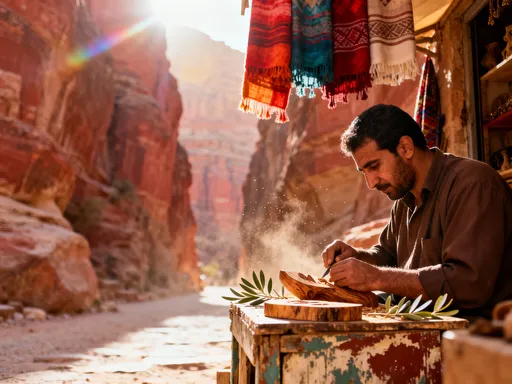
Observing these artisans at work reveals a deep sense of pride and patience. One weaver, whose family has practiced the craft for over a century, explained (through a local guide’s translation) that each piece carries a story. “When I weave,” he said, “I am not just making a blanket. I am remembering my father, my grandfather. Their hands were on these same tools.” This intergenerational continuity is both a strength and a vulnerability. While the demand for authentic crafts remains strong, younger generations are increasingly drawn to urban life and modern professions. Some artisans worry that without renewed interest, these skills could fade.
Yet there are signs of resilience. Several cooperatives have formed to support women weavers and dyers, ensuring fair wages and access to markets. These groups emphasize sustainability—not just in materials, but in social impact. By sourcing wool from local sheep, using rainwater for rinsing, and avoiding synthetic chemicals, they align tradition with contemporary values. For visitors, purchasing from such cooperatives means supporting a system that honors both people and planet. The authenticity of these goods is not a marketing claim—it is visible in every thread, every hue, every hand-stitched seam.
From Farm to Fountain: The Role of Local Agriculture in Market Offerings
Chefchaouen’s markets are not solely about crafts—they are also deeply rooted in agriculture. The surrounding Rif Mountains provide fertile ground for olive groves, herb gardens, and small-scale farming. Each morning, before the tourist crowds arrive, the market comes alive with the arrival of fresh produce. Farmers from nearby villages bring baskets of figs, almonds, wild thyme, and argan fruit, creating a seasonal rhythm that shapes what is available.
The early hours of the market are perhaps its most authentic. At dawn, the air is cool, and the stalls fill with locals stocking up for the day. One section, less frequented by visitors, functions as a true neighborhood grocery. Here, women select bundles of fresh mint, jars of olive oil, and wheels of goat cheese wrapped in cloth. The olives, cured in brine and seasoned with cumin and lemon, are a regional specialty, often pressed in small village mills. Herbs like za’atar and bay leaves grow wild in the hills and are gathered sustainably, their aroma filling the air as they are bundled and tied.
Seasonality plays a crucial role in the market’s offerings. In spring, wild asparagus and artichokes appear; in summer, plump figs and apricots dominate; autumn brings olives and pomegranates; winter sees the return of hardy greens and preserved foods. This natural cycle ensures that the market remains dynamic, never stagnant. It also reinforces a deep connection between the land and the people—a relationship that is increasingly rare in industrialized food systems.
Agriculture in the region supports both subsistence and commerce. Many families grow enough to feed themselves and sell the surplus in the market. This dual purpose strengthens community resilience, allowing households to remain self-sufficient while participating in the local economy. For visitors, engaging with this agricultural side of the market offers a more complete picture of Chefchaouen’s way of life. Buying a jar of honey from a beekeeper who tends hives in the mountains is not just a transaction—it is an endorsement of a sustainable, place-based food culture.
Tourism’s Double-Edged Sword: Balancing Authenticity and Demand
The rise of tourism has undeniably transformed parts of Chefchaouen’s commercial landscape. Once a quiet mountain town, it now welcomes tens of thousands of visitors each year. This influx has brought economic opportunity, but also challenges. In the central medina, some shops have adapted to tourist tastes by offering mass-produced souvenirs—plastic keychains, machine-printed scarves, and low-quality trinkets imported from abroad. These items, while cheaper and more convenient, lack the soul of authentic craftsmanship.
Yet the response among vendors has been mixed. Some have embraced change, improving displays, adding multilingual signage, and offering guided workshops to enhance the visitor experience. Others resist, continuing to sell only what they have always sold, often at prices that reflect true labor value. The contrast is visible in adjacent stalls: one might offer hand-dyed wool blankets made on-site, while the next sells identical-looking items clearly manufactured elsewhere. Discerning shoppers can often tell the difference—by texture, by scent, by the presence of the artisan.
This tension between authenticity and commercialization is not unique to Chefchaouen, but the city’s size and geography have helped preserve a remarkable degree of integrity. Because the medina is compact and not easily scalable, large retail chains have not moved in. Most businesses remain family-owned, with deep roots in the community. This limits the spread of generic tourism goods and maintains the market’s character. Additionally, many visitors come specifically for the authenticity, seeking out the real over the replica.
Local authorities and cultural organizations have also taken steps to protect traditional crafts. Initiatives to certify authentic products, support cooperatives, and promote ethical tourism have gained traction. While challenges remain—such as rising rents and competition from imports—the overall trend is one of cautious optimism. The market, in many ways, is learning to evolve without erasing its soul.
Off-the-Beaten-Path Commerce: Neighborhood Markets and Weekly Stalls
Beyond the main medina lies another layer of commerce that few tourists see: the neighborhood markets and weekly souks. These gatherings take place on the outskirts of the city or in adjacent villages, drawing people from across the region. The most notable is the weekly souk, held on a rotating schedule in different towns. On its day, Chefchaouen’s peripheral square transforms into a bustling fairground, filled with livestock, tools, textiles, and regional specialties.
Here, the market returns to its most fundamental role: a place of essential exchange. Farmers bring goats and sheep for sale, their animals tethered to wooden posts. Blacksmiths display hand-forged farming tools, while women sell homemade butter and preserved lemons. Unlike the curated stalls of the medina, these vendors prioritize utility over aesthetics. A cooking pot is valued for its durability, not its design. A wool coat is judged by its warmth, not its color.
These weekly markets also serve as social hubs. They are places to meet relatives, share news, and arrange marriages. The atmosphere is lively, sometimes chaotic, but always grounded in community. Children run between stalls, elders sit in shaded corners sipping tea, and music from portable speakers blends with the calls of vendors. For visitors willing to venture beyond the blue walls, this experience offers a rare glimpse into rural Moroccan life.
The goods found here are often unavailable in the tourist center. Hand-hammered copperware, medicinal herbs, and locally brewed honey are just a few examples. These items are not made for display—they are made for use. Purchasing them supports not just artisans, but entire village economies. Moreover, engaging with these markets fosters mutual respect. When a visitor buys a hand-carved walking stick from an elderly craftsman, they are not just acquiring an object—they are acknowledging a lifetime of skill and service.
Practical Insights: How to Shop, Connect, and Respect Local Commerce
Engaging with Chefchaouen’s markets mindfully begins with awareness. The first step is learning to distinguish authentic crafts from mass-produced imitations. Look for signs of handmade work: slight imperfections in stitching, natural variations in dye, and the presence of the artisan. If a scarf feels too smooth or the colors too uniform, it may be machine-made. Genuine wool will have texture and weight; hand-thrown pottery will show fingerprints in the clay.
Timing your visit can also enhance the experience. Arriving early in the morning allows you to see the market in its most active, local state. By midday, crowds increase, and some vendors may close for rest. The weekly souk, typically held on Fridays or Saturdays depending on the rotation, should be visited in the morning when selection is fullest. Weekdays are generally less crowded than weekends, offering more space for conversation and observation.
Language and etiquette matter. While many vendors speak some French or Spanish, a few words in Arabic go a long way. “Salam alaikum” (peace be upon you) as a greeting, “shukran” (thank you), and “bismillah” (in the name of God) when beginning a transaction show respect. Haggling should be polite and good-humored, never confrontational. Start by offering around 70% of the asking price and negotiate gently. If a vendor refuses, accept it gracefully—some set prices they won’t go below.
Finally, consider where your money goes. Purchasing directly from artisans, cooperatives, or family-run stalls ensures that your support reaches the source. Avoid shops that display large quantities of identical items, as these are often resold imports. When in doubt, ask about the origin of a product. Most makers are proud to explain their process. By choosing thoughtfully, travelers contribute to a sustainable economy that values people over profit.
Chefchaouen’s commercial areas are far more than shopping zones—they’re cultural arteries. Every transaction tells a story of heritage, resilience, and connection. By looking beyond the blue walls, travelers don’t just take home souvenirs; they become part of a living tradition. Choosing to engage mindfully transforms a simple visit into a meaningful exchange—one that honors the people who keep the city’s soul alive.