You Won’t Believe What I Found in Arequipa’s Hidden Public Spaces
Nestled between volcanic peaks, Arequipa, Peru, surprised me with its vibrant public spaces—places where culture, history, and daily life collide. I went searching for quiet plazas but discovered bustling hubs of connection and charm. From colonial architecture to local gatherings, these spaces are the city’s living room. This is not just a travel story—it’s a discovery of how people shape their shared worlds in the most unexpected ways. What I found beneath the surface of guidebook highlights was a deeper rhythm: the steady pulse of community, sustained through thoughtful urban design, tradition, and everyday rituals. In a world where public life often feels fragmented, Arequipa offers a quiet revelation—shared space, when nurtured, becomes sacred ground.
First Impressions: Stepping Into the White City
Arequipa greets visitors with a luminous presence. Built from sillar, a white volcanic stone quarried from the surrounding Andes, the city glows under the high-altitude sun. This radiant quality earned it the affectionate nickname Ciudad Blanca, or White City, a title that feels less like poetic license and more like geographical destiny. At over 2,300 meters above sea level, the air is thinner, crisper, carrying a slight chill in the mornings and a golden warmth by midday. The elevation demands a slower pace, and the city obliges—its rhythm measured, deliberate, unhurried.
Unlike the sprawling energy of Lima or the tourist intensity of Cusco, Arequipa feels grounded in daily life. Its historic center, designated a UNESCO World Heritage site in 2000, is not preserved behind glass but lived in, breathed through, and shaped by its residents. The moment I stepped into the city’s core, I realized that public spaces here are not afterthoughts or decorative flourishes—they are central to identity, function, and continuity. Every plaza, arcade, and courtyard tells a story not just of architecture, but of human presence.
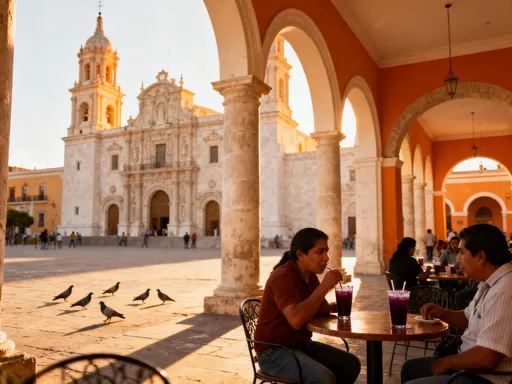
The Plaza de Armas, Arequipa’s central square, is the city’s most visible heartbeat. Ringed by two-story colonnades with red-tiled roofs and grand arches, it radiates colonial elegance. The cathedral, with its twin bell towers and intricate stone carvings, dominates one side, a testament to both faith and resilience, having been rebuilt multiple times after earthquakes. But what truly brings the plaza to life are the people—locals sipping steaming cups of api morado, a spiced purple corn drink, children chasing pigeons, and elderly couples sharing quiet conversations on weathered wooden benches.
This is not a space staged for photographs. It is a stage for life itself. The sounds—laughter, street music, the clatter of trays from nearby cafes—blend into a comforting hum. Even as tourists weave through with cameras and maps, there is no sense of intrusion. The plaza belongs to everyone. It welcomes without condition, inviting passersby to pause, observe, and participate. In this balance of heritage and habitation, Arequipa reveals its first lesson: beauty matters, but only when it serves people.
The Heartbeat of Community: Plaza de Armas Revisited
The Plaza de Armas is more than a scenic landmark—it is a social nucleus, a living room for the city. Each morning, as the sun climbs above the Chachani volcano, the square awakens with purpose. Street vendors unfold wooden carts and arrange steaming trays of picarones, sweet potato and pumpkin doughnuts drizzled with chancaca syrup. The scent of fried dough and cinnamon curls through the air, drawing early risers and curious travelers alike. By mid-morning, school groups arrive, sketching the ornate fountains or listening to guides recount the city’s layered history.
As the day progresses, the rhythm shifts. Families claim shaded benches beneath the molle trees, their rustling leaves filtering the sunlight. Teenagers gather near the cathedral steps, chatting between classes. Elders play chess on public boards, their moves deliberate, their conversations punctuated by laughter. In the late afternoon, the plaza softens—couples stroll arm in arm, dogs trot beside their owners, and street musicians begin to tune their instruments. By dusk, the cathedral is softly illuminated, casting long shadows across the cobblestones, and the square takes on a dreamlike quality.
What makes this space so powerful is not its size or symmetry, but its inclusivity. There is no gatekeeping, no unspoken rules about who belongs. A grandmother feeding pigeons sits beside a backpacker checking a map. A businessman in a suit pauses to watch a folk dance performance. The plaza does not distinguish between resident and visitor, rich and poor, young and old. It simply offers space—and in doing so, fosters a rare sense of belonging.
This continuity of use, repeated across generations, reveals how public spaces can become vessels of cultural memory. The same fountains that children toss coins into today were once the meeting points for lovers, the gathering spots for protests, the stages for celebrations. The stones remember. And because the space remains open, accessible, and inviting, those memories are not locked in the past—they are lived anew every day. The Plaza de Armas is not just a place to see; it is a place to be, to become part of something larger than oneself.
Beyond the Main Square: Discovering Hidden Courtyards and Walkways
While the Plaza de Armas commands attention, Arequipa’s quieter spaces offer a different kind of magic. Just steps from the main square, narrow side streets lead to casonas—colonial-era mansions that once housed wealthy families. Many of these grand homes have been preserved, and some open their inner courtyards to the public during daylight hours. These courtyards, known as patios, are hidden sanctuaries of calm, where time seems to slow and the city’s noise fades.
One such courtyard, located near the entrance to the Santa Catalina Monastery, is framed by arched walkways and tiled with hand-painted azulejos. At its center, a stone fountain trickles softly, surrounded by potted geraniums and climbing jasmine. The walls, painted in warm ochres and soft yellows, reflect the sunlight in gentle waves. Unlike the bustling plazas, these spaces invite stillness. Visitors sit on low benches, read books, or simply close their eyes and listen to the water. There is no rush, no agenda—just presence.
These courtyards are not museum exhibits. They are lived-in spaces, often part of functioning cultural centers, schools, or private residences that choose to share their beauty. Their accessibility reflects a deeper cultural value: that beauty and tranquility should not be hoarded, but offered as gifts to the community. In a world where private wealth often means gated exclusivity, Arequipa’s casonas stand as quiet acts of generosity.
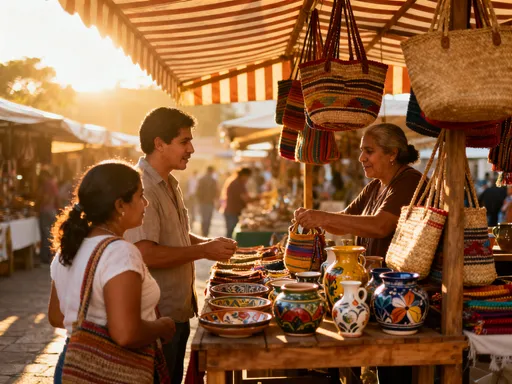
Equally significant are the portales—the covered arcades that line the Plaza de Armas and extend into surrounding streets. Originally designed as commercial spaces for merchants, these shaded walkways now host a mix of artisan shops, coffee houses, and bookstalls. They provide relief from sun and rain, but more importantly, they encourage lingering. People stop to browse handwoven textiles, sip coca tea, or chat with shopkeepers. The portales blur the line between public and private, commerce and community, creating semi-public zones where social life can unfold naturally.
Together, the courtyards and arcades demonstrate how urban design can shape behavior. When spaces are designed for comfort—shaded, quiet, beautiful—people stay longer. And when people stay, they connect. These hidden spaces may not appear in every travel brochure, but they are essential to understanding Arequipa’s soul. They prove that a city’s richness is not measured only by its monuments, but by the quality of its in-between places.
Santa Catalina Monastery: A City Within a City
No visit to Arequipa is complete without stepping into the Santa Catalina Monastery, a 16th-century complex that feels less like a religious site and more like a self-contained village. Spread across more than 20,000 square meters, it is so vast that it occupies an entire city block, with narrow cobblestone streets, plazas, gardens, and even a bakery. Built for cloistered Dominican nuns, the monastery was closed to the outside world for centuries. Since opening to visitors in 1970, it has become one of Peru’s most unique public spaces—a place where solitude and accessibility coexist in harmony.
Walking through its high walls is like entering another dimension. The thick stone barriers block out the city’s noise, creating an atmosphere of stillness. The walls themselves are painted in deep blues, terracotta reds, and ochre yellows, colors that shift with the sunlight. Small doorways lead to private cells, communal dining halls, and quiet chapels. Fountains mark intersections, and flower-filled courtyards offer moments of reflection. The scale is both intimate and expansive—designed for contemplation, yet welcoming to curious eyes.
What makes Santa Catalina extraordinary is its transformation. Once a place of isolation, it now functions as a shared cultural experience. Visitors walk the same paths once trod in silence, pause at the same altars once reserved for prayer, and gaze at the same views once seen only by nuns. This evolution—from private to public, from hidden to revealed—challenges assumptions about what public space can be. It proves that even the most sacred or secluded places can open their doors without losing their essence.
The monastery also illustrates how preservation and accessibility can coexist. Careful restoration has maintained its authenticity, while clear signage and guided tours ensure that visitors understand its history and significance. There are no ticket booths inside, no loud announcements—just quiet respect. This balance allows the space to retain its spiritual quality while serving an educational and communal purpose. Santa Catalina is not just a museum of the past; it is a living example of how shared spaces can honor tradition while embracing the present.
Modern Life in Traditional Spaces: Markets and Riverfronts
Public life in Arequipa extends beyond colonial plazas and religious complexes. In the city’s markets and riverfront areas, tradition and modernity blend seamlessly. The Mercado San Camilo, located just outside the historic center, is a sensory explosion. The air is thick with the scent of roasting meats, fresh herbs, and ripe tropical fruits. Vendors call out prices, their voices rising above the clatter of knives and sizzling grills. Rows of stalls display everything from rocoto peppers to hand-carved wooden spoons, from medicinal herbs to rainbow-colored textiles.
While primarily a commercial space, San Camilo functions as a social hub. Communal seating areas, often made of simple wooden benches, allow shoppers to rest, eat, and talk. It is common to see families sharing plates of anticuchos—grilled beef heart skewers—or couples sipping fresh fruit juices. The market is not just a place to buy food; it is a place to enjoy it, to connect over shared flavors and familiar routines. This blending of utility and community reflects a broader truth: when public spaces serve practical needs, they become more vital, not less.
Equally important is the Yanahuara viewpoint, a public space built around an 18th-century chapel with distinctive sillar towers. Perched on a lava rock formation, it offers panoramic views of Arequipa, framed by arched stone windows. In the late afternoon, the plaza fills with photographers, couples, and families watching the sunset paint the Misti volcano in golden hues. Benches are arranged to face the view, encouraging people to sit, reflect, and share the moment. Unlike more formal plazas, Yanahuara feels organic—a place shaped by natural beauty and human instinct rather than strict design.
These spaces—market and viewpoint—show that public life in Arequipa is not confined to the past. They demonstrate how functionality and beauty can coexist, how a city can honor its roots while evolving to meet contemporary needs. Whether it’s the practicality of a market or the emotional resonance of a sunset view, these places fulfill deep human desires: to gather, to share, to feel part of something real. In doing so, they reinforce the idea that public spaces are not luxuries—they are necessities.
How Urban Design Shapes Experience
The success of Arequipa’s public spaces is no accident. It is the result of deliberate urban design choices that prioritize people over vehicles, connection over convenience. The city’s historic core is largely pedestrianized, with narrow streets and wide sidewalks that encourage walking. Traffic is limited, noise is reduced, and the pace of life slows naturally. This human-scaled environment makes it easy to linger, to observe, to engage.
Materials matter, too. The consistent use of sillar stone creates visual harmony, tying buildings, plazas, and walkways into a cohesive whole. This material choice is not merely aesthetic—it is cultural, grounding the city in its geological and historical context. Even modern additions respect this palette, ensuring that new construction does not disrupt the city’s character.
Comfort is built into the design. Benches are plentiful, often placed in shaded areas or facing key views. Fountains provide both beauty and sound, masking urban noise with the calming trickle of water. Trees—especially the native molle—offer shade and seasonal color. Public art, from historical markers to sculptural details, adds layers of meaning without overwhelming the space.
These design elements reflect a deeper cultural value: convivencia, a Spanish term that means coexistence, shared life, or harmonious living together. In Arequipa, this value is not just spoken—it is built into the streets. When sidewalks are wide, when benches are inviting, when spaces are safe and clean, people are more likely to use them. And when people use them, community grows. The city’s planners, whether centuries ago or today, understood that design shapes behavior. A well-designed public space does not just accommodate people—it invites them in, makes them feel at home, and encourages them to stay.
Why This Matters: The Global Value of Shared Spaces
In an age dominated by digital connection, Arequipa offers a powerful reminder: physical gathering still matters. Its plazas, courtyards, markets, and viewpoints are not just beautiful—they are functional democracies. Here, status and wealth do not determine access. A child playing near a fountain has as much right to the space as a visiting dignitary. This equality of presence is rare and precious.
Other cities can learn from Arequipa’s example. As urbanization accelerates worldwide, the pressure to prioritize efficiency, density, and economic output often comes at the expense of shared space. Parking lots replace parks. High-rises block sunlight from sidewalks. Public areas become commercialized or surveilled. But Arequipa shows that another path is possible—one where preservation and usability go hand in hand, where history is not a barrier to modern life, but a foundation for it.
The city’s model is not about grand gestures, but small, consistent choices: placing a bench where someone might sit, planting a tree where someone might rest, leaving a courtyard open where someone might reflect. These acts of care accumulate into a culture of belonging. They remind us that the soul of a city does not reside in its tallest building or busiest mall, but in the spaces where people meet, talk, laugh, and simply exist together.
What I discovered in Arequipa was not just beautiful architecture or scenic views. I found a living testament to the power of shared space. In its quiet courtyards and bustling markets, in its ancient plazas and evolving neighborhoods, I saw how a city can be both rooted and alive. The true magic of Arequipa lies not in what you see, but in how you feel—seen, welcomed, and part of something enduring. And that, perhaps, is the greatest discovery of all.