Where Art Lives in the Trees: Karuizawa’s Architectural Soul
Nestled in Japan’s green highlands, Karuizawa blends nature and creativity like nowhere else. I was stunned by how architecture here doesn’t just stand—it converses with the forest. From modern chapels to hidden art nooks, every structure feels like a piece of living art. This isn’t just design; it’s emotion shaped in wood, glass, and stone. The trees lean in as if listening. Light filters through pine canopies to dance across minimalist facades. Even the silence here feels intentional, curated. Karuizawa, long cherished as a summer retreat since the Meiji era, has evolved into a sanctuary where art and architecture grow from the earth as naturally as moss on stone. It is a place where visionaries come not to impose on the landscape, but to listen to it.
The Artistic Pulse of Karuizawa
Karuizawa’s identity as a cultural haven began in the late 19th century when foreign missionaries and Japanese intellectuals discovered its cool mountain air and serene forested slopes. What started as a quiet escape from Tokyo’s summer heat gradually transformed into a magnet for artists, writers, and architects seeking inspiration in nature’s rhythm. Over time, the town developed a reputation not just for its climate, but for its openness to creative experimentation. Today, Karuizawa is home to a constellation of art festivals, design studios, and architectural residencies that attract visionaries from across Japan and beyond. The town does not impose rigid aesthetics; instead, it invites dialogue between tradition and innovation, making it a fertile ground for architectural expression.
What makes Karuizawa particularly compelling to creators is its deep respect for harmony. Unlike urban centers where buildings compete for attention, here structures are expected to recede into the landscape, to become part of the forest’s quiet narrative. This ethos draws architects who are less interested in bold statements and more in subtlety, in the poetry of space and light. Institutions such as the Karuizawa Cultural Center and seasonal art programs supported by local foundations have further cemented the town’s role as a creative incubator. Artists are given space—both physical and conceptual—to explore how form can emerge from place. The result is an organic evolution of design, where buildings feel less constructed and more grown.
The town’s history as a retreat for Japan’s elite during the Meiji and Taisho periods laid the foundation for its artistic sensitivity. Early summer villas were designed with an emphasis on tranquility and natural integration, often featuring wide eaves, timber frames, and gardens that blurred the boundary between inside and outside. These principles have been carried forward, not as rigid rules, but as a living design philosophy. Contemporary architects working in Karuizawa often cite these historical precedents as sources of inspiration, adapting them with modern materials and techniques. The continuity between past and present gives the town a layered aesthetic, where every new structure feels like a respectful response to what came before.
Architecture That Breathes with Nature
In Karuizawa, architecture is not imposed upon the land—it is coaxed from it. The guiding principle for most designers working here is *ma*, the Japanese concept of intentional emptiness, of space that allows for reflection and connection. Buildings are positioned to frame views of the forest, to catch the morning light, or to channel the sound of wind through carefully placed openings. This sensitivity to natural forces is not merely aesthetic; it is deeply philosophical. Japanese design has long emphasized wabi-sabi, the beauty of imperfection and transience, and in Karuizawa, this is evident in the weathering of wood, the irregularity of stone, and the way structures age gracefully alongside the trees.
Materials are chosen not for their durability alone, but for their ability to harmonize with the environment. Cedar, a native wood known for its fragrance and resilience, is widely used in both structural elements and interior finishes. Its warm tones contrast beautifully with the cool transparency of glass, which is employed extensively to dissolve boundaries between interior and exterior. Stone, often sourced locally, anchors buildings to the earth, giving them a grounded presence. These materials are not polished to perfection; instead, they are left with visible grain, texture, and variation, celebrating their natural origins. The result is architecture that feels alive, responsive to seasonal changes and the passage of time.
One exemplary project that embodies this philosophy is a public community center designed by a leading Japanese architect in the early 2010s. Nestled at the edge of a pine grove, the building features a gently sloping roof covered in moss, blending seamlessly into the surrounding foliage. Large glass walls open onto a courtyard where a single ancient tree stands as the centerpiece. Inside, the layout follows the natural slope of the land, with spaces unfolding gradually, encouraging slow movement and contemplation. The use of cross-laminated timber reduces environmental impact while providing structural strength. What makes this building remarkable is not its size or complexity, but its quiet confidence—its ability to exist without demanding attention, to be present without overpowering the forest.
The Chapel in the Mist: A Masterpiece of Silence
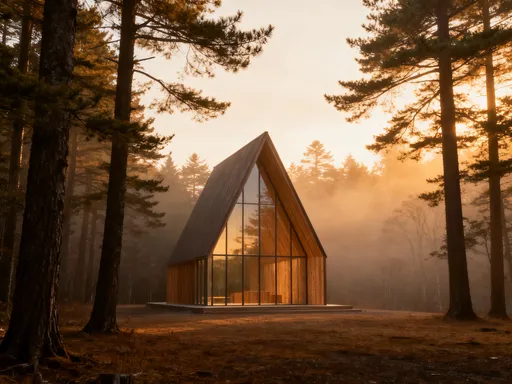
Among Karuizawa’s most revered architectural sites is a small, unassuming chapel that appears almost by accident along a winding forest path. Known simply as the Chapel in the Mist, this structure has become a pilgrimage site for those seeking stillness. Designed by a renowned architect known for his spiritual minimalism, the chapel is a study in restraint. Its exterior is clad in charred cedar, a traditional Japanese technique called *shou sugi ban*, which not only preserves the wood but gives it a textured, almost sacred appearance. The entrance is low and narrow, requiring visitors to bow slightly—a subtle gesture that shifts the mindset before entering.
Inside, the space is spare but profoundly moving. Light enters through a single vertical slit in the eastern wall, casting a thin beam that moves slowly across the floor as the sun rises. There are no pews, no altar in the conventional sense—only a small stone platform and a view of the forest through a frameless glass window. The ceiling rises gently, drawing the eye upward, while the floor, made of polished concrete, reflects the soft glow of daylight. Acoustics are carefully calibrated; even a whisper resonates, yet the ambient sound of rustling leaves remains audible. The architecture does not dominate; it facilitates presence. Visitors often sit in silence for long periods, not in prayer necessarily, but in deep listening.
What makes this chapel exceptional is its ability to transform function into feeling. It was not designed for large gatherings or ceremonial spectacle, but for individual reflection. The architect intended it as a space where one could confront the self in the quiet company of nature. In this way, the building becomes a kind of sculpture—one that shapes human experience rather than merely housing it. Many visitors describe a sense of emotional release upon leaving, as if the structure had gently untangled something within them. It is a rare example of architecture that does not speak, but listens.
Hidden Galleries and Open-Air Sculpture Paths
Beyond its built landmarks, Karuizawa offers a network of walking trails where art emerges unexpectedly from the landscape. These open-air sculpture paths are not formal galleries with plaques and barriers, but immersive experiences where the line between artwork and environment dissolves. Along a moss-lined trail, a bronze figure might appear half-buried in the roots of an old tree. Around a bend, a mirror-polished sphere reflects the canopy in fractured light. These installations are often site-specific, created in response to the topography, vegetation, and seasonal rhythms of their locations.
One particularly evocative section of the trail leads through a bamboo grove where sound sculptures hang from the stalks. Made of wind-activated metal chimes and wooden clappers, they produce a soft, irregular music that changes with the breeze. Visitors move slowly, not just to see, but to hear and feel. The pacing is deliberate—these paths are not meant to be rushed. Information is minimal; there are no signs explaining the works, encouraging personal interpretation. This approach aligns with the Japanese aesthetic of *yūgen*, a sense of mystery and depth that cannot be fully articulated. The experience is less about understanding and more about sensing.
Local artists and international collaborators contribute to rotating installations, ensuring that the trail evolves over time. Some pieces are temporary, lasting only a season, while others have become beloved landmarks. One such work is a stone spiral embedded in a clearing, inspired by ancient burial mounds but reimagined as a meditative labyrinth. Visitors often walk its path barefoot, connecting physically with the earth. The integration of sculpture and landscape architecture here is so seamless that it becomes difficult to say where nature ends and art begins. For families and solo travelers alike, these trails offer a gentle, contemplative form of engagement—one that rewards patience and presence.
Modern Museums with a Mountain Whisper
Karuizawa is home to several contemporary art museums that exemplify the town’s architectural ethos. The Karuizawa New Art Museum, situated on a forested hillside, is a prime example. Its low-slung profile ensures it does not dominate the skyline, while its façade, made of layered concrete panels, mimics the texture of tree bark. The entrance is discreet, leading visitors through a sunken courtyard before revealing the main gallery space. This sequence of compression and release—a common technique in Japanese architecture—creates a sense of arrival, of stepping into a protected realm.
Inside, the museum’s design enhances the art it houses. Natural light filters through skylights with diffusing screens, eliminating glare while maintaining brightness. The gallery walls are slightly curved, avoiding sharp corners to soften the atmosphere. Exhibitions focus on contemporary Japanese artists whose work engages with nature, memory, and impermanence. One recurring theme is the interplay between organic forms and industrial materials, echoing the town’s own dialogue between forest and structure. Temporary installations often incorporate live plants, water features, or sound elements, blurring the boundary between artwork and environment.
What sets these museums apart is their refusal to act as neutral containers. Instead, the buildings themselves are part of the exhibition. A corridor might open unexpectedly to a view of the valley, reminding visitors of the landscape beyond. A staircase wraps around a living tree that grows through the center of the building, a literal fusion of art and nature. These moments are not accidents; they are carefully orchestrated to create pauses, reflections, and connections. For visitors, the experience is cumulative—a slow unfolding of ideas and sensations that lingers long after leaving.
Design-Driven Stays: When Hotels Become Art
In Karuizawa, even accommodations are designed as extensions of the artistic landscape. Boutique hotels and ryokans (traditional inns) are not merely places to sleep, but immersive experiences in spatial harmony. One standout property integrates a 100-year-old farmhouse into a modern complex, preserving its timber frame while adding minimalist glass pavilions that open onto private gardens. Guests enter through a narrow passage lined with stone, emerging into a courtyard where koi glide through a still pond. The transition is deliberate—a shedding of urban urgency.
Interiors emphasize simplicity and natural materials. Tatami mat rooms coexist with contemporary suites featuring floor-to-ceiling windows and heated stone floors. The design philosophy is one of reduction: fewer objects, more space, intentional lighting. Even bathrooms are treated as contemplative spaces, with wooden baths filled with spring water and views of moss-covered rocks. Meals, often served in private dining rooms or communal hearth halls, feature seasonal ingredients sourced from local farms, reinforcing the connection to place.
Another notable stay is a cluster of treehouse-inspired cabins elevated on stilts among the pines. Each cabin is oriented to capture sunrise or sunset, with retractable roofs for stargazing. The interiors are compact but meticulously detailed—sliding doors with handmade paper screens, built-in furniture from reclaimed wood, and silent ventilation systems that preserve the sounds of the forest. Guests report a profound sense of disconnection from daily stress, not through luxury in the conventional sense, but through thoughtful design that prioritizes peace and presence. These stays do not merely host travelers; they transform their experience of time and space.
Planning Your Art-Focused Visit
To fully appreciate Karuizawa’s architectural and artistic offerings, timing and pacing are essential. The best periods to visit are late spring (May to early June) and autumn (October to early November), when the foliage is at its most vivid and the air is crisp. Summer brings greenery and mild temperatures, ideal for walking, but also more visitors. Winter offers solitude and a different kind of beauty—snow-draped trees and quiet paths—but some outdoor installations may be inaccessible. Early mornings and weekdays are ideal for avoiding crowds, especially at popular sites like the Chapel in the Mist and the New Art Museum.
A recommended walking route begins at the Karuizawa Prince Shopping Plaza, not for shopping, but as a central access point. From there, a paved path leads into the Karuizawa Nature Art Trail, where several sculptures are located within a 30-minute walk. Continuing onward, visitors can reach the Chapel in the Mist, then loop back through the forest toward the New Art Museum. This route covers approximately 4 kilometers and allows time for pauses, photography, and reflection. Comfortable walking shoes, a light jacket, and a small backpack with water are advised.
Transportation within Karuizawa is straightforward. The town is accessible via the Hokuriku Shinkansen from Tokyo, with a transfer at Karuizawa Station. From the station, local buses serve major destinations, and rental bicycles are available for independent exploration. Taxis are reliable for reaching more remote sites. Many hotels offer shuttle services, especially for guests. For those with limited mobility, several key sites, including the museum and parts of the sculpture trail, are wheelchair accessible. Information centers at the station and major hotels provide multilingual maps and brochures, and some offer guided walking tours focused on architecture and art.
When planning, consider staying for at least two nights to allow for a slow, immersive experience. Rushing through Karuizawa defeats its purpose. The town rewards those who linger, who sit quietly by a stream, who return to the same bench at different times of day to see how light changes the mood of a building. It is not a checklist destination, but a place to recalibrate the senses.
Karuizawa’s architecture is more than shelter—it’s a dialogue between human imagination and the quiet power of nature. By choosing to explore it with intention, travelers don’t just see art; they live inside it. This is where journeys become reflections, and buildings teach us how to breathe.